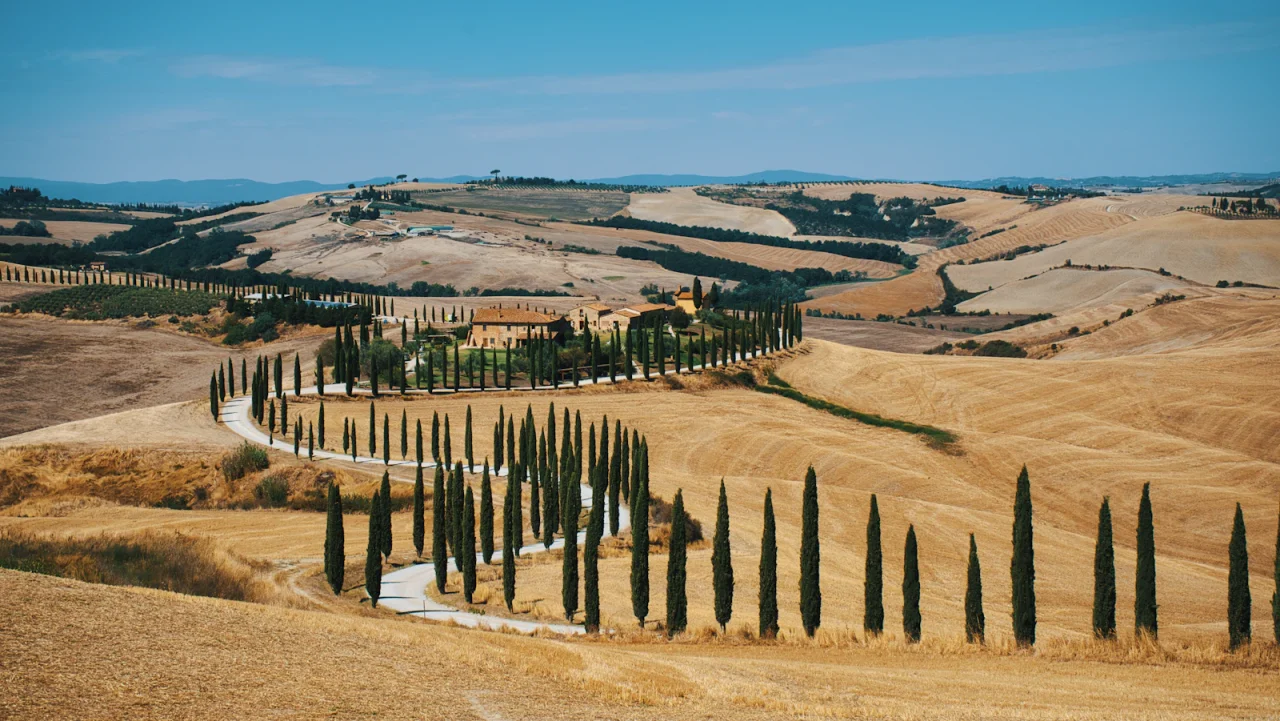
Can Americans buy property in Italy? Yes. US citizens can buy a house, a villa or a farmhouse in Italy, in Tuscany as anywhere else, on the same terms as Italians. What changes is the practical side: getting an Italian tax code from the US, signing from a distance, moving money, understanding the purchase taxes and keeping both the Italian and the US tax authorities happy.
This guide is written for American buyers by the English-speaking lawyers of Studio Legale Stoppa, in Sansepolcro (Arezzo, Tuscany). For the full legal process – due diligence, pre-emption rights, farmland and vineyards – see our main guide on buying property in Tuscany as a foreigner.
In short
- US citizens can buy property in Italy: the reciprocity rule is satisfied.
- You need an Italian tax code (codice fiscale), which you can get from an Italian consulate in the US.
- You can buy without travelling, with a power of attorney signed at the consulate or before a US notary with an apostille.
- Purchase taxes on a second home bought from a private seller: 9% registration tax on the cadastral value, plus fixed taxes.
- Owning a house in Italy does not give you a visa or the right to live there.
- Rental income and Italian bank accounts must also be reported in the US: involve your US tax adviser.
1. Can Americans buy property in Italy?
Yes. Under Italian law (Article 16 of the preliminary provisions to the Civil Code) a foreigner can buy property in Italy if Italians can buy property in his or her country: the so-called reciprocity rule. Italians can buy real estate in the United States, so US citizens can buy in Italy – a house, an apartment, a villa, a farmhouse with land or a vineyard – personally, jointly with a spouse or through a company.
You do not need to be resident in Italy, to have a visa or to have Italian ancestry. Dual US-Italian citizens buy simply as Italian citizens.
2. What you need before you buy
The Italian tax code (codice fiscale)
Every buyer needs a codice fiscale, the Italian tax identification code. From the US you can request it through the Italian consulate responsible for your area; in Italy it is issued by the Revenue Agency (Agenzia delle Entrate). It is free, and we can apply for it on your behalf with a power of attorney.
Money transfers and anti-money-laundering checks
The price must be paid in a traceable way (bank transfer or banker’s draft) and the payment details are written in the deed. The notary carries out anti-money-laundering checks and may ask where the funds come from: keep the documents of your US bank transfers. An Italian bank account is not compulsory to buy, but it is useful for utilities and the annual property tax.
A mortgage from an Italian bank
Some Italian banks lend to non-residents, usually for a smaller share of the price than for residents and after longer checks. Many American buyers pay cash or borrow in the US.
3. How to buy a house in Italy from the US, step by step
- Offer (proposta d’acquisto). Usually signed through the estate agent. Once the seller accepts it, it can already be binding: have it checked before you sign.
- Checks. Your lawyer and a local surveyor (geometra) check title, mortgages, planning and cadastral compliance, pre-emption rights and, for rural properties, land and agricultural rules.
- Preliminary contract (compromesso) and deposit (caparra). It sets price, dates and conditions, and must be registered with the Revenue Agency. If the seller backs out, you can claim double the deposit.
- Final deed (rogito) before an Italian notary. The notary checks the legal requirements, collects the taxes and registers the transfer. You or your attorney-in-fact sign; ownership passes on that day.
The notary acts for both parties and does not advise you alone. Your own lawyer reads the contracts on your side, in English, and negotiates the terms.
4. Buying without travelling: power of attorney from the US
You can buy without coming to Italy. You sign a power of attorney (procura) in favour of a person you trust, often your lawyer, who then signs the deed in your name. From the US the power of attorney can be signed:
- at an Italian consulate, in Italian, ready to be used in Italy; or
- before a US notary public, with the apostille of the Secretary of State (Hague Convention of 1961) and a translation into Italian, or in a bilingual text.
We prepare the text in Italian and English, so you know exactly what you are signing, and check it with the notary in advance.
Typical situations of American buyers
- A retired American couple buying a country estate in Chianti to live there part of the year: we check the house, the land and any farm buildings, explain which taxes apply if you do or do not move your residence to Italy, and coordinate with your US tax adviser.
- A US executive buying a stone farmhouse in the Val d’Orcia or in the Siena countryside while still working in the US: we negotiate and run the checks locally, and you sign the deed through a power of attorney without travelling.
- A family from New York buying a villa in the Florence hills or an apartment in Siena: we check historic-building restrictions, condominium rules and the paperwork for the transfer of funds from the US.
In each case the first step is the same: tell us about the property and your plans using the form at the end of this guide.
5. Purchase costs and taxes for American buyers
Taxes depend on who sells and on whether the house will be your main home, not on your nationality.
- From a private seller, second (holiday) home: registration tax of 9% on the cadastral value of the property (often much lower than the price), plus €50 mortgage tax and €50 cadastral tax.
- “First home” rate (prima casa), 2%: only if you move your residence to the town where the house is within 18 months, and the property is not a luxury one. For most Americans buying a holiday home it does not apply.
- From a builder or company: VAT instead of registration tax, usually 10% (22% for luxury homes), plus fixed taxes.
- Notary fees, the estate agent’s commission (in Italy usually paid by both buyer and seller, plus 22% VAT), the surveyor and your lawyer.
Every year you then pay IMU, the municipal property tax on second homes, and TARI, the waste tax. For the full list see section 6 of our Tuscany guide.
For every cost explained with a worked example, see our guide to the costs of buying a house in Italy.
6. Do I get residency if I buy a house in Italy?
No. Buying property in Italy does not give a US citizen a visa or the right to live there. As an American you can stay up to 90 days in any 180-day period in the Schengen area. To live in your Italian home for longer you need a national visa and then a residence permit, for example the elective residence visa for people with stable passive income, requested at the Italian consulate in the US before leaving. If you become tax resident in Italy, you may also look at the Italian regimes for new residents.
7. US taxes on property in Italy
The US taxes its citizens on their worldwide income, so owning a house in Italy also has a US side. In general:
- Rental income from your Italian home (including holiday lets) is taxed in Italy and must also be reported on your US return; the Italy-US tax treaty and the foreign tax credit help avoid double taxation.
- Italian bank accounts may have to be reported (FBAR when your foreign accounts exceed $10,000 in total; Form 8938 above higher thresholds). A house you own directly is not itself a reportable account.
- When you sell, a gain may be taxable in the US even if it is not in Italy.
We work alongside your US CPA or tax adviser on these points; we do not give US tax advice ourselves.
8. Common mistakes American buyers make
- Signing the agent’s offer form without reading it: it can bind you.
- Relying only on the notary: the notary is neutral and does not check everything you may care about, such as building works done without permits or the real state of the roof.
- Forgetting pre-emption rights of neighbouring farmers when buying a farmhouse with land.
- Paying a large deposit before the checks are done.
- Thinking that the house comes with the right to live in Italy.
9. Frequently asked questions
Can a US citizen buy property in Italy?
Yes. Italians can buy property in the United States, so US citizens can buy in Italy on the basis of reciprocity, without being resident and without a visa.
Can I buy a house in Italy without going there?
Yes. You can sign a power of attorney at an Italian consulate in the US, or before a US notary with an apostille, and your attorney-in-fact signs the deed before the Italian notary.
How much are the taxes when an American buys a house in Italy?
Buying a second home from a private seller, registration tax is 9% of the cadastral value, plus €100 of fixed taxes. On top come notary, agent and lawyer fees. The rates depend on the type of sale, not on your nationality.
Does buying a house in Italy give me residency?
No. A US citizen can stay up to 90 days in any 180 days. To live in Italy longer you need a visa, such as the elective residence visa, and then a residence permit.
Do I need a lawyer if there is a notary?
It is not compulsory, but the notary is neutral. Your own lawyer checks the property and the contracts on your side, in English, before you sign the offer and the preliminary contract.
10. How we can assist American buyers
We assist US buyers in English, remotely by email and video call and in person in Sansepolcro, between Arezzo, Florence and Perugia. We obtain your codice fiscale, prepare the power of attorney, review the offer and the preliminary contract, coordinate the checks with your surveyor, follow the deed with the notary and work with your US tax adviser. Our fees are agreed in writing before work begins. We call you back within one working day, at a time that suits your US time zone (phone, WhatsApp or video call).
Tell us about the property you want to buy
Fill in the form below (fields marked * are required), or contact us directly: info@studiolegalestoppa.it · +39 389 960 7564 · WhatsApp. See also our page for English-speaking clients in Tuscany.

Lawyer (Avvocato) in Sansepolcro and Arezzo, Tuscany · property purchases, real estate and civil law · assists English-speaking clients
This guide contains general information updated to October 2026 and does not replace legal advice on a specific case.