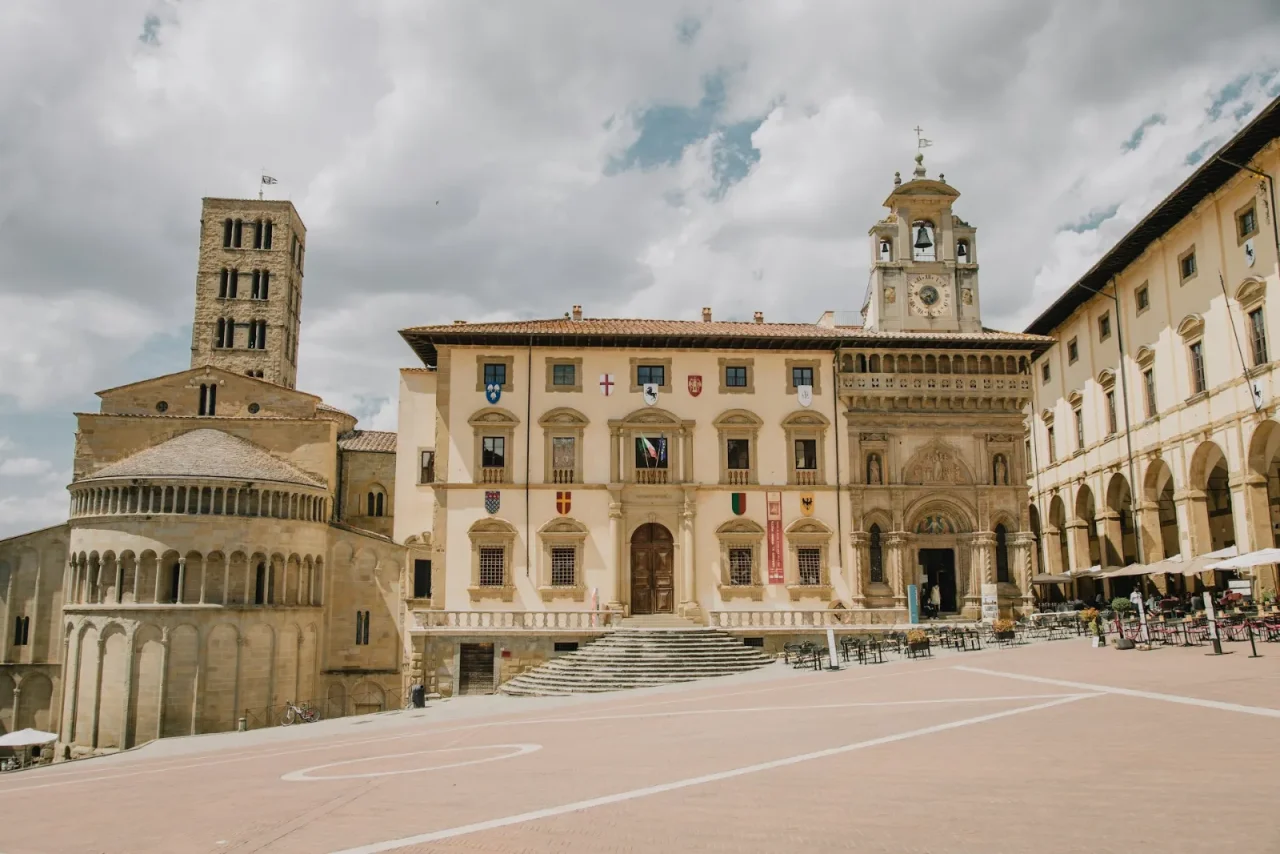
A villa in the Chianti hills, a stone farmhouse near Cortona or Anghiari, an estate with olive groves or a small vineyard: every year many foreign buyers choose Tuscany. The legal rules are different from those in the UK, the US or Northern Europe, and some of them – planning compliance, pre-emption rights, agricultural restrictions – can turn a dream purchase into a long problem if they are checked too late.
This guide is written by the English-speaking lawyers of Studio Legale Stoppa, based in Sansepolcro, in the province of Arezzo. It explains, step by step, what a foreign buyer should know before signing anything in Tuscany. It is general information and does not replace advice on a specific case. Last reviewed: October 2026.
1. Can a foreigner buy property in Tuscany?
EU citizens and the reciprocity rule
Citizens of the European Union and of the European Economic Area can buy property in Italy on the same terms as Italians. Citizens of other countries can buy on the basis of reciprocity: if an Italian can buy property in their country, they can buy in Italy (art. 16 of the preliminary provisions to the Italian Civil Code). Reciprocity applies, for example, to buyers from the United Kingdom, the United States, Canada, Australia and Switzerland. Foreigners who hold a valid Italian residence permit do not need the reciprocity check. If you are a US citizen, see also our guide to buying a house in Italy as an American (tax code from the consulate, power of attorney with apostille, US tax reporting).
Tax code, bank account and anti-money-laundering checks
Every buyer needs an Italian tax code (codice fiscale), which can be obtained from the Italian Revenue Agency or from an Italian consulate abroad. An Italian bank account is not compulsory, but it makes payments easier. The price must be paid with traceable means (bank transfers or banker’s drafts), and the deed states how it was paid. Notaries, agents and lawyers must carry out anti-money-laundering checks: be ready to show your identity, the source of the funds and, if you buy through a company, who its beneficial owners are.
Buying personally, jointly or through a company
Most private buyers purchase in their own name, alone or with a spouse or partner. Buying through an Italian or foreign company can make sense for an estate with a farming business, a winery or a property to be rented out, but it has different tax and inheritance consequences. This choice should be made with your lawyer and tax adviser before the preliminary contract.
2. The buying process, step by step
The offer (proposta d’acquisto)
In Italy the written offer signed with an estate agent is often irrevocable for a period and becomes binding as soon as the seller accepts it. It may already contain the price, the deposit and the date of the deed. For this reason it is wise to have the offer reviewed before you sign it, and to make it conditional on the outcome of the checks.
The preliminary contract and the deposit (compromesso and caparra)
The preliminary contract binds both parties to complete the sale. It usually provides for a deposit, the caparra confirmatoria (art. 1385 of the Civil Code): if the buyer withdraws without a valid reason, the seller keeps the deposit; if the seller withdraws, the buyer can claim double the amount. The preliminary contract can be registered with the land registry, which protects the buyer if the seller sells to someone else or a creditor registers a mortgage in the meantime.
The final deed before the notary (rogito)
Ownership passes with the deed signed before an Italian notary, who checks the land registry, registers the deed and collects the taxes. The notary is a public official and acts for neither party. If a party does not understand Italian, the law requires an interpreter, and the deed can be drawn up in two languages.
Buying remotely, with a power of attorney
You do not need to be in Italy for every step. You can sign a power of attorney (procura) before a notary in your country, with an apostille, or at an Italian consulate. Your lawyer can then sign the preliminary contract and the deed on your behalf, after you have approved the final texts.
3. Due diligence on a Tuscan farmhouse or villa
Country houses in Tuscany have often been extended and transformed over the decades. The checks below are the ones that matter most; they are carried out by your lawyer together with a local surveyor (geometra) or architect.
| What to check | Why it matters |
|---|---|
| Ownership, mortgages, liens, court proceedings | The property must pass free of charges, or the charges must be cancelled at the deed. |
| Planning compliance (conformità urbanistica), past amnesties (condono) | The deed must state the building permits; works without permits (extensions, verandas, pools, annexes) may be impossible to regularise and can block the sale or a future resale. |
| Cadastral compliance (conformità catastale) | The cadastral plans must match the actual state of the building, otherwise the deed is void. |
| Fitness for use (agibilità), energy certificate (APE) | They show whether the building can be lawfully used as a home and what it costs to run. |
| Septic tanks, treatment plants and wells | Outside the public sewer, the discharge of waste water needs an authorisation; wells must be registered or licensed. |
| Landscape and hydrogeological constraints | Many rural areas of Tuscany are protected: works, pools and new roads need specific permits. |
| Agricultural buildings and change of use | Barns and annexes built as farm buildings cannot always be turned into homes; rural buildings created under a farm improvement plan (PAPMAA, Tuscan Regional Law 65/2014) can be tied to agricultural use for many years. |
| Rights of way, shared roads, boundaries | Access to country houses often crosses neighbours’ land. |
A simple rule: if the agent says that a barn “can be converted” or that a pool “can be added”, ask for it to be checked in writing with the municipality’s planning rules before you commit.
4. Pre-emption rights that can affect your purchase
Neighbouring farmers and tenants (prelazione agraria)
When agricultural land is sold, a farming tenant and, in certain conditions, a neighbouring farmer who works the land (coltivatore diretto) have a right of first refusal at the same price (Laws 590/1965 and 817/1971). The seller must notify them of the preliminary contract, and they have 30 days to exercise the right. If they are not notified, they can in some cases take over the purchase within one year of the registration of the deed. Before buying a farmhouse with land, it is therefore important to identify who may hold this right and to obtain written waivers or serve proper notice.
Listed buildings, historic villas and castles
When a building is listed as of cultural interest, the sale must be notified to the Ministry of Culture within 30 days, and the State (or the Region or municipality) can buy it at the same price within 60 days (Legislative Decree 42/2004, arts. 59–62). Until that period has passed, the buyer cannot take possession. Works on listed buildings need the approval of the local Soprintendenza.
Co-owners and co-heirs
If the seller owns the property together with others, for example with other heirs, all co-owners must sign, and in some cases co-heirs have a right of first refusal on the share being sold.
5. Agricultural land, olive groves, vineyards and agriturismo
Buying farmland
Foreigners can buy agricultural land, subject to the reciprocity rule. Tax relief on farmland is reserved to professional farmers (coltivatore diretto or imprenditore agricolo professionale, IAP); other buyers normally pay a 15% registration tax on the land. Investors who want to run a farm often do so through an agricultural company with a qualified manager.
Buying a winery
Vineyards are recorded in the regional vineyard register, which lists the plots, the grape varieties and the planting authorisations; the register must match the actual state of the vineyard. Whether the wine can be sold as Chianti, Brunello or another DOC/DOCG wine depends on the vineyard’s registration and on the rules of each designation. Buying the shares of a wine company keeps licences and registrations in place but also its liabilities; buying the assets requires the registrations to be transferred.
Running an agriturismo
In Tuscany an agriturismo can only be run by a farming business, and farming must remain the main activity (Tuscan Regional Law 30/2003). There is no nationality requirement, but non-EU citizens need a residence status that allows them to work: the elective residence visa does not. Only existing buildings no longer needed for farming can be used to host guests.
6. Purchase taxes and costs
| Case | Main taxes |
|---|---|
| Home bought from a private seller | Registration tax 9% (2% for a main home), minimum €1,000, plus €50 mortgage tax and €50 cadastral tax. The tax is usually calculated on the cadastral value. |
| Home bought from a builder or company | VAT 10% (4% for a main home, 22% for luxury categories), plus €200 registration, €200 mortgage and €200 cadastral tax. |
| Agricultural land | Registration tax 15% for buyers who are not professional farmers. |
The reduced rates for a main home require the buyer to take up residence in the municipality within 18 months and are not available for luxury categories (A/1, A/8, A/9). On top of the taxes come the notary’s fees, the agent’s commission (usually a percentage of the price plus VAT), the surveyor’s fees and, if you appoint one, your lawyer’s fees, which we quote in writing before starting.
7. Moving to Tuscany: residence and tax regimes
Buying a home does not give a visa
Owning property in Italy does not, by itself, give a right to live in Italy. Non-EU citizens need a visa and a residence permit: for people living on passive income, the elective residence visa; for those who work remotely, the digital nomad visa; for investors, the investor visa, which requires an investment in Italian government bonds, companies, innovative start-ups or philanthropic projects – real estate does not qualify.
The flat tax on foreign income
People who move their tax residence to Italy after a long period abroad can opt for a substitute tax on all their foreign income (art. 24-bis of the Income Tax Code). The 2026 Budget Law raised the annual amount to €300,000, plus €50,000 for each family member included, for those who move to Italy from 2026; lower amounts apply to those who moved earlier. The option lasts up to 15 years and requires that the person was not resident in Italy for at least 9 of the previous 10 years.
Other regimes
Workers who move to Italy may benefit from the regime for “impatriates”, which partly exempts employment and self-employment income for five years. The 7% flat tax for foreign pensioners applies only to small municipalities in certain southern regions and in some earthquake areas: it is not available in Tuscany.
8. Owning the property: annual taxes, renovation, holiday lets
Owners of second homes pay the municipal property tax (IMU) and the waste tax (TARI). Renovation works need the permits required by the type of work and by any landscape or heritage constraint. If you want to rent out the house to tourists, you need the national identification code (CIN), the regional code and the communications to the municipality and the police; income from short lets can be taxed with a flat rate of 21% on the first property and 26% from the second. Some Tuscan municipalities with high tourist pressure, such as Florence, can limit new short lets.
9. Selling and passing the property on
Selling
If you sell within five years of buying and the house was not your main home for most of that time, the gain is taxed; you can choose a 26% substitute tax paid through the notary. Different rules apply to properties renovated with the “Superbonus”.
Inheritance
Under EU Regulation 650/2012 the succession is governed by the law of the country where the deceased had their habitual residence, unless they chose the law of their nationality in a will. If Italian law applies, close relatives (spouse and children) are entitled to a reserved share. Italian inheritance tax is 4% for spouse and children on the part above €1 million each, 6% for brothers and sisters above €100,000, 6% for other relatives and 8% for others; on real estate, mortgage and cadastral taxes are also due. A will and the choice of the applicable law are worth considering as soon as you buy.
10. Where foreign buyers look in Tuscany
The Chianti between Florence and Siena, the Val d’Orcia with Montalcino, Pienza and Montepulciano, the countryside around Lucca and Siena, the Val di Chiana around Cortona, Castiglion Fiorentino and Lucignano, the Casentino (Poppi, Bibbiena), the Valdarno and the Valtiberina (Sansepolcro, Anghiari, Monterchi, Caprese Michelangelo), on the border with Umbria. Many buyers also look at the hills around Florence and Fiesole, at Greve in Chianti and San Casciano in Val di Pesa, and at the Tuscan coast, from the Maremma to the Monte Argentario, where landscape and coastal constraints are often stricter. Each municipality has its own planning rules, landscape constraints and, in some cases, limits on holiday lets: the same type of farmhouse can be subject to very different rules a few kilometres apart.
Typical situations of foreign buyers
An olive estate or a country house as a second home, not as a business. Many buyers look at olive groves in Greve in Chianti or Montepulciano, or at a villa with land, without wanting to run a farm. That is possible: a private buyer can own agricultural land, but the pre-emption rights of farmers, the rules on rural buildings and the higher purchase tax on farmland for buyers who are not professional farmers must be checked before signing. The olive harvest or the vineyard can be entrusted to a local farmer under a written agreement.
A house for the summer, rented to tourists the rest of the year. If you plan to use a farmhouse in San Casciano in Val di Pesa or elsewhere in Tuscany for a few months and let it for the rest of the year, check before you sign that the municipality allows short lets, that the property can obtain the national identification code (CIN), and how the rental income is taxed in Italy. Your tax position in your home country should be reviewed with your own adviser.
A historic villa bought by a family from the United States. For a villa near Florence or Siena, the key points are whether the building is listed (the State has a right of first refusal and must approve works), the planning history of later additions, and the transfer of funds from abroad. Our guide to buying a house in Italy as an American explains the steps for US citizens.
A country estate bought when relocating to Italy. Buying a home and obtaining a visa or residence permit are two separate procedures (see section 7). If you are moving to Tuscany, plan them together, so that the deed, your registration of residence and any first-home tax benefits are timed correctly.
11. Frequently asked questions
Can a non-EU citizen buy a house in Tuscany?
Yes. Citizens of countries that allow Italians to buy property, such as the UK, the US, Canada, Australia and Switzerland, can buy in Italy on the basis of reciprocity. Foreigners with a valid Italian residence permit do not need the reciprocity check.
Do I need my own lawyer if there is a notary?
The notary is a public official who draws up the deed and collects the taxes, but acts for neither party. An independent lawyer acts only for you: reviews the offer and the preliminary contract, coordinates the checks and protects your deposit.
How much are the total costs of buying a house in Italy?
It depends on the seller and on the property. From a private seller the registration tax is 9% (2% for a main home), usually calculated on the cadastral value; then there are the notary’s fees, the agent’s commission and the technical and legal fees. A written estimate should be prepared before the offer.
What happens to my deposit if the sale falls through?
With a caparra confirmatoria, if the buyer withdraws without a valid reason the seller keeps the deposit; if the seller withdraws, the buyer can claim double. That is why the checks should be done before signing the preliminary contract.
Can I buy a property in Italy without travelling there?
Yes. With a power of attorney signed before a notary in your country (with apostille) or at an Italian consulate, your lawyer can sign the preliminary contract and the deed on your behalf, after you have approved the texts.
Who can handle the full purchase of a farmhouse or villa in Tuscany while I am abroad?
Your own lawyer. The estate agent finds the property and the notary drafts the deed, but neither of them represents you. We coordinate the whole purchase for you – a farmhouse in the Siena countryside, a villa in the Chianti or the Val d’Orcia, an estate in Montalcino or a house on the coast at Castiglione della Pescaia or the Monte Argentario: we check title, planning compliance and pre-emption rights with the surveyor, negotiate the preliminary contract and the deposit, arrange your tax code and power of attorney, and sign at the notary on your behalf if you cannot travel. You approve each step by email or video call.
Can a neighbouring farmer take the land I am buying?
When farmland is sold, a farming tenant and, in some conditions, a neighbouring farmer have a right of first refusal at the same price. They must be notified; if they are not, they may in some cases take over the purchase within one year of the registration of the deed. It must be checked before buying.
Can the State block the purchase of a historic villa?
If the building is listed, the State (or the Region or municipality) can buy it at the same price within 60 days of the notification of the sale. Until then, the buyer cannot take possession.
Can I convert a barn into a guest house?
Not always. It depends on the municipality’s planning rules and on how the building was authorised: rural buildings created for farming can be tied to agricultural use for many years. It should be checked in writing before you commit.
Does buying a house give me a residence permit in Italy?
No. Non-EU citizens need a visa and a residence permit, for example the elective residence visa for people living on passive income. Real estate does not qualify for the investor visa.
How much is the Italian flat tax for new residents?
For those who move their tax residence to Italy from 2026 the substitute tax on foreign income is €300,000 a year, plus €50,000 for each family member included, according to the 2026 Budget Law. Lower amounts apply to those who moved earlier.
Can I rent out my Tuscan home to tourists?
Yes, with the national identification code (CIN), the regional code and the required communications. Some municipalities with high tourist pressure, such as Florence, can limit new short lets.
What happens to my Italian house when I die?
Under EU Regulation 650/2012 the succession follows the law of your habitual residence, unless you choose the law of your nationality in a will. The heirs must file a succession declaration in Italy within 12 months.
12. How we can assist
We assist foreign buyers in English, French and Russian, in person in Sansepolcro and remotely by email and video call. We review the offer and the preliminary contract, coordinate the technical checks with your surveyor, deal with pre-emption rights, prepare powers of attorney, follow the deed with the notary and work with your tax adviser on the tax side. We also assist with residence permits, inheritance and holiday-let rules. Our fees are agreed in writing before work begins. We call you back within one working day, at a time that suits your time zone (phone, WhatsApp or video call).
Tell us about the property you are buying
Fill in the form below (fields marked * are required), or contact us directly: info@studiolegalestoppa.it · +39 389 960 7564 · WhatsApp. Need an English-speaking lawyer in Italy for another matter? See our page for English-speaking clients.

Lawyer (Avvocato), member of the Arezzo Bar (Ordine degli Avvocati di Arezzo) · Studio Legale Stoppa, Sansepolcro, Tuscany · Last reviewed: October 2026
This guide contains general information updated to October 2026 and does not replace legal advice on a specific case.